Floating
Arctic floating in Tromso: getting into the Arctic Ocean on purpose
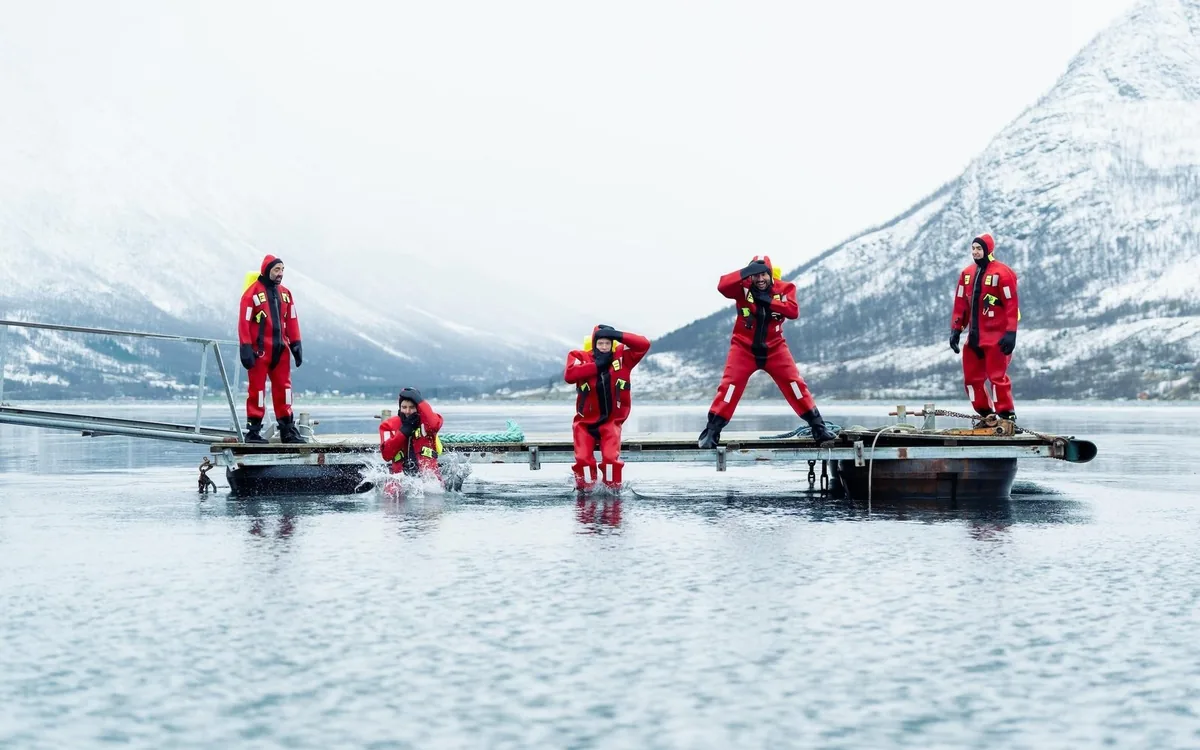
You put on a buoyant thermal suit, walk into a fjord at 69 degrees north, and lie on your back in the sea. It sounds like an ordeal and it is rated 4.9 across 795 reviews, which makes it one of the best-rated things on this entire site. This page is what actually happens and why people react to it the way they do.
Quick answer
Arctic floating in Tromso takes three to three and a half hours and costs from $204. You are given a full flotation suit — buoyant, insulated and watertight at the neck and wrists — and you float in the fjord for as long as you want to, usually twenty to forty minutes. Snacks and hot drinks follow. In winter it is done in the dark, often under the aurora. Rated 4.9 across 795 reviews.
Arctic floating, at a glance
- Length
- 3–3.5 hoursincluding transfer, suit and hot drinks
- Price
- $204per person
- In the water
- 20–40 minutesas long as you want, within reason
- The suit
- Buoyant and insulatedsealed at neck and wrists
- Water temperature
- ~3–8°Cdepending on season
- Do you get wet?
- Hands and face onlythe suit keeps the rest dry
- Winter version
- In the darkoften under the aurora
- Rating
- 4.9across 795 reviews
- Swimming needed?
- Nothe suit floats you
- Cancellation
- Free to 24 hlike every sailing here
What it is actually like
The bit nobody can describe until they have done it
Sealed, weightless and quiet — and in winter, the aurora directly above you.
The suit is the whole trick. It is a one-piece survival suit with built-in buoyancy, sealed at the neck and wrists, and once it is on you are effectively a sealed, floating object. Getting into it takes ten minutes and looks ridiculous.
Walking into the water is the moment people brace for and it does not come: you feel pressure rather than cold, because nothing touches your skin except at the face and the hands. Then you lie back, the suit takes your weight entirely, and the sea holds you at the surface with no effort at all.
What follows is the part the reviews are about. There is almost no sensory input: no noise, no effort, no temperature to speak of. You are looking straight up at an Arctic sky from the surface of the sea. In summer that means low gold light for hours; in winter it means stars and, on a good night, the aurora directly overhead while you float.
Groups usually spend twenty to forty minutes in the water. Nobody hurries you out and nobody keeps you in. Afterwards there is a warm base, hot drinks and something to eat, and the strange calm that people describe for hours afterwards.
Before you book
Six practical answers
The questions everybody asks before this one, in order.
- You do not need to swim
The suit floats you on your back with no effort. Being a non-swimmer is not a barrier; panicking in water is a different question and worth being honest about.
- You will not get cold, but your hands will
The suit seals at the wrists and the water is a few degrees. Most operators provide gloves; ask, and keep your hands out of the water if they do not.
- Wear less than you think underneath
The suit is insulated. Thermal base layers are enough; a thick jumper makes it hard to get into.
- It is a group activity
Everybody goes in together and the guides are in the water with you. It is more sociable than it sounds.
- Winter is the better version
Darkness, stars and a real chance of the aurora while you float. Summer is calmer and less extraordinary.
- Check the minimum age
Operators set one, and it is higher than for the boat cruises. This is one to check before booking for a family.
If being in the water is a step too far, the hot tub on an open deck gets you outside in an Arctic winter with a drink in your hand instead.
Compare every sailing→Why people react to it the way they do
Sensory deprivation, at 69 degrees north
No cold, no effort, no sound — and in winter the aurora directly overhead.
Four hundred people a season describe the same thing in different words: it is unexpectedly calming.
The mechanism is not mysterious. The suit removes cold, effort and buoyancy problems all at once. Your ears are at the waterline so sound drops away. You cannot move much and there is nothing to do. What is left is a very large sky and the sensation of being held.
In winter the sky is dark and full of stars, and if the aurora comes it is directly above you with no horizon and no foreground — which is a view you cannot get any other way, because on land you are always looking up past something.
The reviews reflect it. A 4.9 across 795 people is an unusual score for anything, and for an activity that involves getting into the Arctic Ocean in midwinter it is remarkable. The small number of unhappy reviews are almost all about cold hands, which is the one part the suit does not solve.
Floating in summer or winter
Five differences between the two versions
Both run; they are not the same evening.
- Winter: darkness and stars
And a genuine chance of the aurora while you are on your back in the water.
- Summer: midnight sun
Floating at eleven at night in gold light, with the water at its warmest — which here means about eight degrees.
- Winter: colder hands
The single complaint in the reviews. Ask for gloves and keep them out of the water.
- Summer: easier to book
More departures and more daylight to move them into.
- Either: the same suit
The suit does the work in both seasons; what changes is the sky above it.
Common questions
Arctic floating, answered
What is Arctic floating?
A guided session in which you wear a buoyant insulated suit and float on your back in an Arctic fjord, usually for twenty to forty minutes, with hot drinks afterwards.
Is it cold?
Less than you expect. The suit seals at the neck and wrists, so only your face and hands are exposed. Most operators provide gloves.
Do you need to be able to swim?
No. The suit provides all the buoyancy and holds you on your back without any effort.
Can you see the northern lights while floating?
In winter, on a clear night, yes — you are lying on your back looking straight up with no light around you. It is not guaranteed, and it is the reason many people book it.
How long are you in the water?
Typically twenty to forty minutes, and it is your choice. The whole trip is three to three and a half hours including the suit, the transfer and hot drinks.
Is it suitable for children?
Operators set a minimum age, and it is higher than for the fjord cruises. Check the listing before booking for a family.
Go deeper
More on Arctic boat tours
The Tromso fjord cruise
What four hours in the fjords contains, and which boat does it best.
The verdictWhich boat is best
Eleven sailings ranked, and which suits which traveller.
WinterWinter cruises
Polar night, blue light and what still sails in January.
SummerMidnight sun sailings
Late May to late July, when the sun never goes down.
CostWhat it costs
From $117 to $490, and what is actually included.
SommaroySommaroy
Six hours west to the island village with white beaches.
