Feb – Mar
Late winter
The best window of the year. Daylight is back — six hours in early February, eleven by late March — the landscape is still fully white, the fish racks are hung, and the aurora season is still running.
Winter
Between about 27 November and 15 January the sun does not rise in Tromsø at all. That sounds like a reason to book another month and it is the opposite: what replaces daylight is four to six hours of blue and pink twilight that photographers travel here specifically to shoot, and the aurora on the way home.
Quick answer
Fjord cruises run all winter from Tromso, from $117. During the polar night — roughly 27 November to 15 January — the sun stays below the horizon and midday is several hours of deep blue and pink light. Boats are heated, thermal suits are provided, and on clear evenings the aurora is visible from the deck. February and March bring daylight back with the snow still full, which is why they are the best months here.
What the polar night actually looks like
Four to six hours of blue and pink at midday, and the aurora on a clear evening.
The phrase misleads people. During the polar night the sun stays below the horizon, but it is not far below it: around midday the sky lifts into a long, even twilight that runs from deep blue through violet to pink where the sun almost is. It lasts four to six hours and it is bright enough to walk, sail and photograph in.
Photographers call it the blue hour, and in Tromsø in December it is not an hour but most of the day. Snow takes the colour of the sky, so a white fjord goes lavender and the water goes ink. Nothing else in Europe looks like it, and it is the reason a lot of people book this month deliberately.
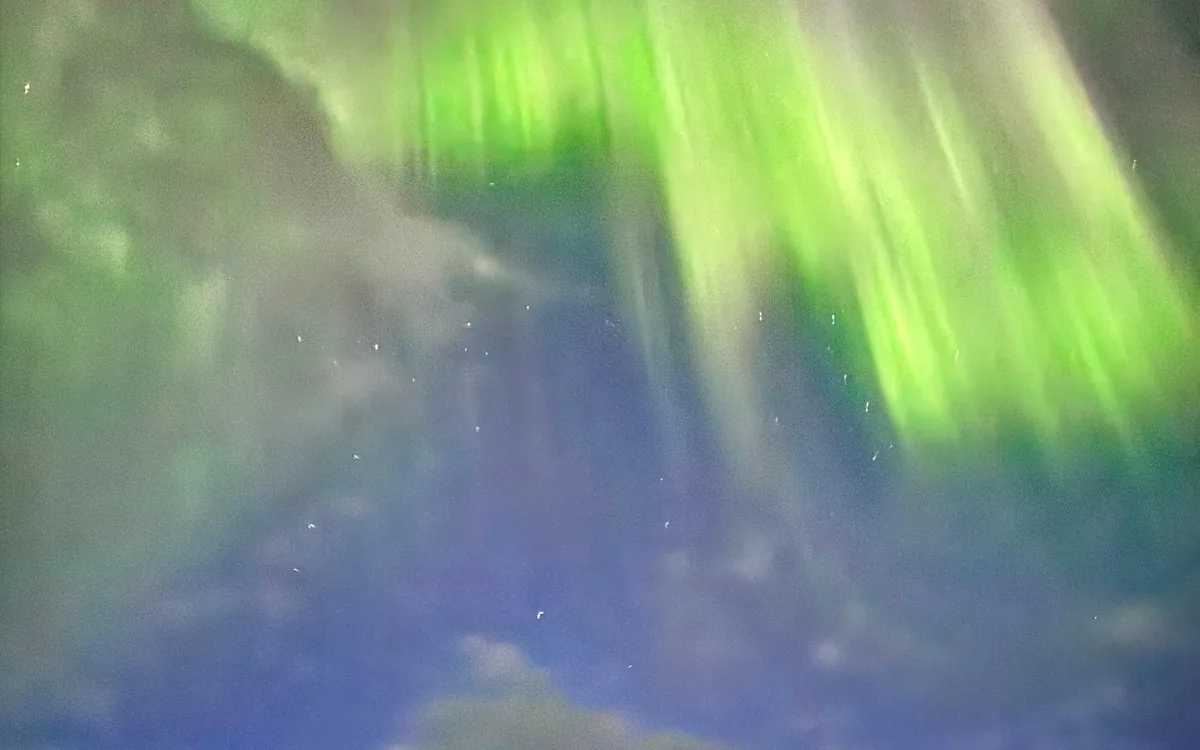
The other half of the trade is the aurora. In a normal year the lights are possible any clear night from September to March, and on the water there is nothing between you and the northern horizon. An evening fjord cruise in January is a real chance at both the twilight and the aurora in the same four hours.
What you give up is distance. In deep winter the boats work the nearer fjords rather than running out to the islands, and long sailings like the six-hour Sommarøy trip spend much of their time in the dark. That is an argument for a four-hour cruise in December and the long one in March.
How cold it actually is
Around minus four, damp and windy — and the suit leaves out exactly the parts that matter.
Visitors expect Siberian numbers and Tromsø does not deliver them. The same Atlantic current that keeps the fjords open keeps the air relatively mild: a normal January day sits around minus four, and a cold snap of minus twelve is notable rather than routine.
What makes the deck cold is wind and moisture. Coastal air is damp, and a boat moving at ten knots creates its own wind on top of whatever the fjord is doing. That combination cuts harder at minus four than dry stillness does at minus fifteen.
The suits handle most of it. Every big sailing here hands out a thermal suit that goes over your own clothes and blocks wind and spray. What they never cover is your head, your hands and your feet, and those three are the reason people go inside early. A fitted hat, proper gloves and warm boots turn a four-hour winter sailing from an endurance test into a good afternoon.
Also worth knowing: the cabin is warm, and it is not where anything happens. The eagles, the light and the aurora are all outside, and so is the guide.
Month by month
Five stars means both that the boat is likely to sail and that the light is worth being out in.
Feb – Mar
The best window of the year. Daylight is back — six hours in early February, eleven by late March — the landscape is still fully white, the fish racks are hung, and the aurora season is still running.
Dec – Jan
The sun does not rise. Midday is a long blue-pink twilight and the aurora is a real possibility on any clear evening sailing. Cold, dark and unlike anywhere else.
Nov
The light collapses fast through the month and the first storms come through. Quiet boats, cheap flights, and a genuine chance of being blown out.
Apr
Enormous light, snow still on the mountains, and calm water. The aurora fades as the nights shorten, and everything else improves.
Booking a winter sailing
Everything here follows from wind and daylight.
It is the brightest part of the day and the warmest. An evening sailing is for the aurora, not for the view.
Winter storms cancel boats here. A sailing booked for your first day can be moved to your third; one booked for your last cannot.
Thermal layers, a fitted hat, real gloves and warm boots. The suit does the wind; you do the rest.
In deep winter the long sailings spend most of their time in the dark.
It is possible on any clear evening from September to March and no fjord cruise promises it.
Full snow, real daylight and the aurora still running. It is the best month here by some distance.
Photographing the blue hour
Lavender snow, ink water, and one known colour in the frame to prove it is real.
In December, Tromsø gives you what photographers elsewhere get for forty minutes at dusk — and it gives it to you for most of the day.
The technical part is straightforward. The light is dim and blue, so a phone will push the ISO and produce noise, and a camera will want a slow shutter that a moving deck ruins. Brace against a rail, shoot in short bursts, and accept that half the frames will be soft.
The compositional part is where the month pays off. Snow takes the colour of the sky, so a white mountain in polar-night twilight is genuinely lavender, and black water against it is the strongest contrast you will find in any European landscape. Put something with a known colour in the frame — a red boathouse, a Norwegian flag on the stern, a yellow jacket — and the blue reads properly instead of looking like a white-balance mistake.
And do not chase the aurora with the same settings. It moves, so a three-second exposure turns a curtain into a smear; two seconds and a wider aperture keeps the structure.
A winter day in Tromso around the sailing
Everything here is within ten minutes of the harbour.
Four hundred metres above the fjord in four minutes, and the whole island laid out. Best in the blue hour.
The white triangular church across the bridge, and the building every photograph of Tromsø has in it.
A small Arctic aquarium with bearded seals, five minutes from the quay, and a good hour when the weather is impossible.
Trapping, sealing and the expeditions that left from this harbour. Grim, honest and excellent.
Ølhallen has been open since 1928 and is a hundred metres from the boats.
Common questions
Yes, all winter. The fjords never freeze, and the boats sail through the polar night. Wind rather than cold is what cancels a sailing.
The sun does not rise between about 27 November and 15 January, but midday brings four to six hours of blue and pink twilight — bright enough to sail and photograph in.
On clear evenings between September and March, yes. Being on the water removes the town lights entirely. No cruise here promises the aurora.
Air temperatures average around minus four in Tromsø, which is mild for the latitude. Wind and damp make the deck feel colder; the provided thermal suit handles most of it.
February or March: daylight has returned, the landscape is still fully white and the aurora season is still running.
For photographers and for anyone who has never seen it, genuinely yes. The midday twilight over snow is unlike any other light in Europe.
Go deeper
What four hours in the fjords contains, and which boat does it best.
The verdictEleven sailings ranked, and which suits which traveller.
SummerLate May to late July, when the sun never goes down.
CostFrom $117 to $490, and what is actually included.
SommaroySix hours west to the island village with white beaches.
FishingGear, a line over the side and lunch from your own catch.

Tromsø: Arctic Fjord Cruise With Stop On Land At Fish Racks
★ 4.5 · 2,611 reviews · Free cancellation 24 h